Tuesday, January 23, 2007

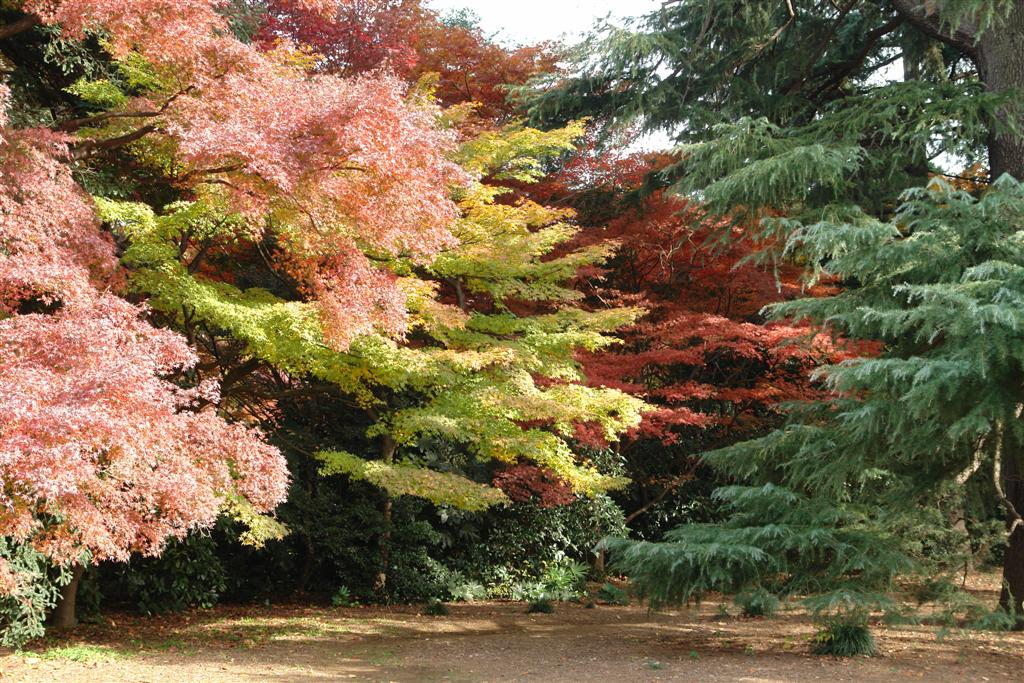
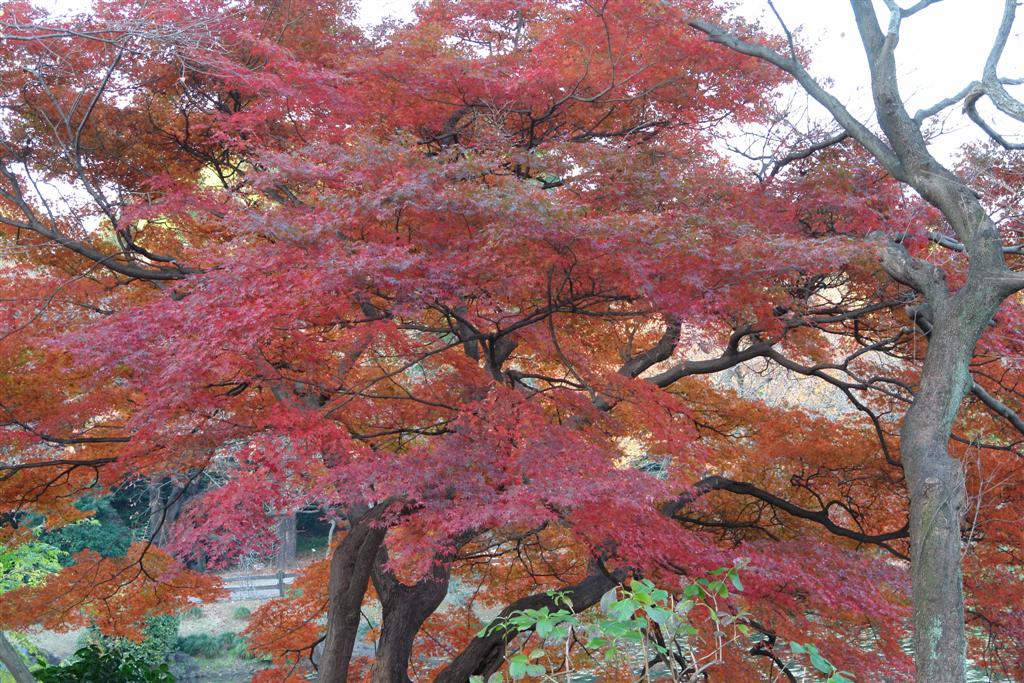
Haven't I told you about our Kansai spree yet?

Probably, you are overwhlemed by my foodie stories and other photos of our Hokkaido escapade. Now, I'm gonna lure you of the must-see places that we visited during our 4-day galore in Kansai.

Briefly, Kansai is just like Tokyo on the west side of Japan. Prices are still high, although comparatively lower than in Tokyo. Surprisingly, I didn't shop much. In fact, I didn't buy anything except for some diapers and baby milk for my toddler, and of course, oatmeal. ;)

While we greeted the New Year with a bang, our first night of the year was spent in Honmachi, a place somewhere between the Kita (North) and Minami (South) area of Osaka. If I were to describe our trip around Kansai, I would say it was such a walking saga. Read on to find out why.

To our luck, almost all shops were closed on the first two days of the year -- except Starbucks, I guess. On our first night, we strolled around the place somehow exploring the cityscape at night while in dire search for a nice place to dine. Probably, we didn't mind walking at all until we reached the next station, hoping there were some shops open. Sure enough, Pepper Lunch was the only shop open at that time (aside from Starbucks, of course).

The next morning, we headed to Kyoto. Again, in trying to explore the place, we volunteered to walk till we get to the next station (the oppposite side of the last night's stroll) where we departed for Kyoto -- and back.

On the third day, we went to Nara, and got back to Namba early afternoon. Perhaps, our strolling never got tired of us (or the other way around?) that we decided to walk again from Namba to Honmachi. That's 2 stations away, mind you. Of course, we're a bit exhausted already but looking for shops where we could buy baby products was our goal this time. Halfway through our walking saga, our luck had us enjoy our tonkatsu dinner --but not diapers and baby milk. So, that night, we gave Luke fresh milk instead, while observing him for any signs of allergy (none so far, thank heavens!).

Come fourth day -- our last day, strolling was only between sightseeing places, thanks to our friend who knows the way. ;)

In short, our Kansai tour was not only highlighted by sightseeing (see Kyoto adventure, Parts 1, 2 and 3) but also some sort of unplanned/forced wandering in search of food shops (first night) and baby essentials (2nd and 3rd night).

And oh, in most of the places we went to, toilets are not baby-friendly, and toilet paper not supplied. Just for the record. ;)

Wednesday, January 17, 2007

Hokkaido sceneries

Can't get enough of this beautiful place, eh? Here are some photos to lure your eyes with. Hokkaido exhibits a calm, peaceful place to live in -- no rush hour, no crowded places, no cramped houses here and there, no skyscrapers -- a countryside-scape that is truly amazing!

Image Hosted by ImageShack.us

Image Hosted by ImageShack.us

Image Hosted by ImageShack.us

Image Hosted by ImageShack.us

Image Hosted by ImageShack.us

Monday, January 15, 2007

Hangover from my Hokkaido trip

Image Hosted by ImageShack.us

If there is one good thing that changed me for the better after my trip to Hokkaido, that would be rekindling my interest for cooking Japanese dishes.

My host family once gave me a recipe book that contains authentic Japanese dishes. Undoubtly, it tickled my interest to try cooking Japanese dishes. However, along the way, my enthusiasm was met with frustration because buying the unfamiliar ingredients (at least for me they are unfamiliar) was quite confusing. Aside from the fact that I don't even know how some vegetables look like, their labels are of course in Japanese (needless to say, I can't read Nihonggo -- until now) So, dining out has become my way of trying those dishes.

But after our Hokkaido trip, my interest for cooking Jap dishes was hightened again, to an irristible level that I really wanna do it this time. Oh, in fact, I have already done it, starting with tempura. And yeah, my tempura tasted like tempura! ha, ha! ;)

Wanna have some? ;)

Saturday, January 13, 2007

NY's Eve in Hokkaido

Image Hosted by ImageShack.us

Sounding the bell -- hey, it's 2007!


Image Hosted by ImageShack.us
Sleepy eyes? Still awake to welcome the new year. Jumping, shouting!


Image Hosted by ImageShack.us
And of course, eating and drinking -- welcoming the new year with sweets for a sweet year ahead. ;)

Friday, January 12, 2007

Hokkaido foodie photos

As promised, here are some photos of our Hokkaido galore. Enjoy! ;)

Image Hosted by ImageShack.us

Image Hosted by ImageShack.us

Image Hosted by ImageShack.us

Image Hosted by ImageShack.us

Image Hosted by ImageShack.us


Okunomiyaki and takoyaki are both trademarks of Kansai region, but we had the chance to munch them all in Hokkaido as our friend is of Kansai origin.

Check out sites about Genghis Khan and Hokkaido.

Thursday, January 11, 2007

Highlights of our Hokkaido trip

Note: Pardon for this long overdue post. I have nothing but a few lame excuses for procastinating. I know you are eager to hear what we did, what we ate, where we went, so I won't keep you waiting. ;)

To start off, I must say that this was the first and the grandest (in terms of expenses) vacation we ever had here in Japan. Some friends even wondered why on earth did we want to have a vacation in the coldest part of Japan on the coldest month of the year? Many reasons, the most significant of which (at least for us) are to chase snow, and feast on Hokkaido's superb dishes. Not only did we achieve these, we also had grand time with our friends who unselfishly accommodated us in their house.

Food, food, and more food!
We ate at home during our entire stay in Hokkaido, but it was as if we were eating out because the dishes served to us were truly superb. The likes of Genghis Khan barbeque, chawan mushi, soba, tempura and lots more I forgot what they are called. And oh, grilled mochi with seaweeds! Of course, we always had soup, different kind each day.

We went with our friends for their grocery shopping, and my eyes (not jaw) dropped as I get to see the low, low prices of seafoods and vegetables. Pumpkin, for example, was only 50yen -- about 1/3 of the price here in Tokyo. A pack of bean sprouts was goodness gracious 10yen! Crabs, lobsters, prawns and many fishes and fish eggs were, if I'm not mistaken, about half the price in Tokyo. Not to mention, they were all sold FRESH (not seemingly fresh)! Oh, it makes me want to stay in this part of Japan and devour on all those. ;)

There is only one thing I find more expensive than in Tokyo -- my baby's milk! But no choice, I had to buy a few boxes.

Shiny, white snow
Meter-high snow welcomed us when we arrived in Fukagawa. It was a fine day when we arrived there but I felt I was freezing to death. Walking on snow needs an extra care so as not to slip (it melts when the sun is up the whole day).

We played on the snow, tried to make a big snowman which turned out to be a snowdevil (that's what our friends call it). My son and I tried to make snowball. It seems so easy to make one when we watched the Teletubbies, but in reality, it was rather difficult I gave up in the end. My son enjoyed it though not minding his already wet and very cold gloves. Our friend patiently made a snowhouse, and according to him, it was warmer inside.

Just the sight of snow makes me warm inside. I don't know why, but I am kinda happy to experience such a wonderful thing and endure the very cold weather, at least for one week. On a fine day, the rays of the bright sun shine through the snow below and produces a sparkling array of stars down.

Oh, we also went tobogganing twice. Hubby enjoyed it the most. Afterwards, we headed to the onsen.

Onsen
What a comfy feeling to bathe in natural hot spring overlooking the sky and falling snow, while having a nice chat with your friend? At first, I thought I could not endure the 41-degree hot water, but as I slowly immersed myself, I started to feel good. My friend and I hopped from one pool to another, inside then outside, and back.

After almost two hours insde the onsen (that includes bath, shower, dressing up, and a few sips of tea or water), going out didn't make us feel cold anymore.

New Year's Eve
We went to the shrine near our friends' house and waited in line for our turn to hit the gong. Striking the gong is the Japanese way of waking up the townspeople and saying, "Hey. it's already 2007!" At the strike of midnight, many people suddenly showed up and queud up for their turn to show those striking power. ;)

Photos coming up in the next post! ;)

Tuesday, January 09, 2007

Coming of Age Day

Yesterday, as I went out to buy some groceries, I saw many girls clad in their elegant and seemingly heavy kimono, scattered around the park, waiting for something. Then I learned from a friend that yesterday was the Coming of Age Day, or Seijin no Hi.

This day, as Japan Guide puts it,

The Coming of Age festival is celebrated on the second Monday of January (it used to be celebrated always on January 15 until the year 1999). Its Japanese name is Seijin no hi. All young people who turn twenty years old in that year are celebrated on Seijin no hi. Twenty is the age considered as the beginning of adulthood. It is also the minimum legal age for voting, drinking, and smoking.

Celebrations are held nationwide in every town with most of the people turning 20 participating in formal dresses. Seijin no hi is a national holiday.
Quite surprising for me to learn that the kimono these young adults wear are so expensive one could already buy a standard car (according to my friend). Renting is the only option, which means spending about 200,000yen for wearing a complete set of kimono for ONE DAY.

But more than the elegant attire is the spirit with which this day is held -- to become adults not only in terms of age, but more importantly, to THINK, ACT and BEHAVE as ADULTS should.

Read more about Coming of Age here (written in 1998).

Image source: dougcoutts.com

Thursday, December 21, 2006

Bōnenkai

Dear hubby is gonna be home late tonight because his Laboratory is having Bōnenkai (bon-en-kay) tonight.

Literally, Bōnenkai means "forget-the-year party", which is a Japanized English for "year-end party." From what I've gathered, this is a drinking party held to "forget the woes and troubles of the past year, usually accomplished by consumption of large amounts of alcohol." (see Wikipedia) But what about the good things? I don't think they're supposed to be forgotten, too. ;)

I haven't attended any Bōnenkai in my entire stay here in Japan. I envy those who are lucky enough to attend three Bōnenkais at the most (see this survey) -- all for FREE, usually paid for by the company. Although in my husband's case, each attendee paid 4000yen for the party. Why is that?!

Anyway, in the eikaiwa I work for, we had a "staff gathering" early this month, but I am not so sure if that party can be qualified as Bōnenkai for no one did not mention such term. Or could it be that because the school practices what English natives do, that is, Christmas. So, we had Christmas Party with the Japanese students.

By the way, Japanese don't celebrate Christmas as only about 1% of the population are Christians. Thus, Dec 25 is NOT a holiday. Bōnenkai is the most appropriate counterpart of Christmas in Japan. Of course, almost all Japanese are aware of this most important occasion for Christians. This can be gleaned from the oh-so-Christmas-y decorations in shopping malls, and other entities.

Whether Christmas or Bōnenkai, the most important thing is that we are all happy for the year that was, and all are hopeful for the year that is to come.

Happy Holidays! Or should I say, Kampai! (cheers)

P.S. If you are a gaijin in Nihon and happen to attend the Bōnenkai for the first time, check out these tips -- funny but informative.

Wednesday, December 20, 2006

More from Chichibu City

I didn't go to Chichibu, but dear hubby did, as part of the annual tour organized by the University of Tokyo where he is currently studying (and hopefully finish by next spring).

This is a late post, so pardon me for it. But no matter how delayed it is, I find the photos worth sharing.

Chichibu is located in the western part of Saitama Prefecture. It is a mountainous area and is famous for its brewing industry, notably sake. Check out Wikipedia for more info about this suburb place.

Now, for the photos:

Image Hosted by ImageShack.us
Wondering where this road will lead you? The yellow arrow sign actually tells you to "brace yourself, folks!"

Image Hosted by ImageShack.us
Got any idea now? Yup, there is a road in the middle of the mountain, I mean inside the mountain.

Image Hosted by ImageShack.us
See? A yellow bridge bridging the mountain ranges of Chichibu.

Image Hosted by ImageShack.us
The color of nature. So cool ... so bright! Simply awesome! ;)

Tuesday, December 19, 2006

Appreciating nature, and ...

Image Hosted by ImageShack.us


Chichibu Island
University of Tokyo Forest Reserve
Photo by Al (my dear hubby), September 2006


Guess I'm in the mood to post good pictures that calm our weary eyes, and soften our angry hearts.

This one is especially posted for my dear friend, TM. When things seem to make life a little difficult for you, think of these other lifeforms that seem to endure the drastically changing environment, no matter how hard it is to adjust and conform -- in order to survive. Giving up is not an option, my friend. Going on is the way to go. Looking forward, thinking forward. Looking at better things in life amidst difficulties, scrunity, disparity and unfair reception from those you love.

Just like the water that keeps moving and falling; the trees that keep changing leaves and colors, we too should keep living ... and loving. YYY

Monday, December 18, 2006

Survival tips

I have given it a long and thorough thought on how I could impart to you some details, no matter how small or odd they are, of my daily life here in Japan, so you would somehow picture how I survive the daily grind of this hustle-and-bustle place. So, I am coining this series (yes, it is!) survival tips. Who knows, some of these may be applicable to you. ;)

Survival Tip #1.
Everybody knows that Tokyo is a heavenly place such that everything are priced up to heaven. So the trick is, if you want to save some of your precious hard-earned yen, is to shop in the right place and at the right time.

Right place. In my area, I know where I can find the cheapest meat or my favorite cornflakes, or our daily Philippine bananas. In effect, I don't shop in only one place. You might think that is a bit tedious. I don't mind at all, for the shops are just a few meters apart, sometimes facing each other, or on my way home.

And, oh, check out also some recycle shops, that is, if you are not so particular with buying slightly-used items. I'm telling you, those that I bought in these shops look like new.

Right time. Discounts are a no-no here, even in the wet market. But the norm here is that when the sun starts going down, so are the prices of the grocery items. This is especially true for perishables like fish and obentos (ready-made meals). Unless it is urgent, I do my grocery shopping in the afternoon (or evening, after work), where I wait for the price of the fish to go as low as 50%.

Right timing is also good for shopping other necessities. I think I have already memorized the prices of the shoes I wanted to buy for my son, and have gone to many shops to compare prices. And just this afternoon, I chanced upon a beautiful kiddie shoes sold at only 450yen! Knowing that the original price was at 2kyen, I grabbed it right away! Once, I bought my son's outdoor shorts for only hyakuen (100yen)!

More survival tips next time! ;)

Sunday, December 17, 2006

Yoyogi Koen in Shibuya

Image Hosted by ImageShack.us


Sorry for this delayed post. It must have slipped my mind to post it right after we arrived home from our strolling at the huge and forest-like Yoyogi Koen, located in Shibuya-ku, Tokyo.

We visited the park at a time when the leaves were just starting to change from the cool greens of summer to the awesome shining colors of autumn.

Here's a brief yet interesting description from Japan-Guide.com:

Yoyogi Koen (Yoyogi Park) is one of Tokyo's largest city parks, featuring wide lawns, ponds and forested areas. It is a great place for jogging, picnicking and other outdoor activities.

Although Yoyogi Park has relatively few cherry trees compared to other sites in Tokyo, it makes a nice cherry blossom viewing spot in spring. Furthermore, it is known for its ginko tree forest, which turns intensively golden in autumn.

Before becoming a city park in 1967, the area where Yoyogi Park is located today, served as the site of the olympic village for the 1964 Tokyo Olympics, and before that as a residential area for US military personnel.


Image Hosted by ImageShack.us


When we visited the park a month ago, roses of all colors abound around the entrance gate, freshly welcoming visitors and inviting them to a grand tour of the wide park proud to have numerous ginko tree species that brighten your rather gloomy day -- right in the heart of the thickly-populated Shibuya area.

It is just too bad that we aren't able to go see the trees transform in autumn colors. Maybe next time. ;)

Saturday, December 16, 2006

Eigo de?


In my three years as gaijin in Japan, it's quite rare for me to talk to a Japanese who can speak English almost on a native level. When this happens, I feel like I've been freed from an skimpy cell where words are kept to their simplest forms.

In one of our visits to Shinjuku Gyoen (well, we are regulars here), I chanced upon a short yet entertaining conversation with Yoko-san. She is conversant and friendly, and she was the one who initiated the conversation (I had to admit I was hesitant at first). She had lived in New York for five years (if I am not mistaken) and have traveled around Southeast Asia except Philippines, my dear homeland. (As a backgrounder, most Japs have a not-so-good impression about the Philippines, thus shun away from Filipinas and avoid traveling there. I'll post a longer story about this, promise!)

Japs are very eager to learn the English language for various reasons, but mostly for travel and business purposes. As an EFL/ESL teacher, I have experienced teaching Japs of varied levels. The most difficult for me, and I take it as a challenge, is to teach those in the lowest levels for they tend to speak in Japanese in the class, which I don't and can't understand. The easiest are those in the upper bracket where I can freely use some difficult and/or longer words/phrases, and can easily create a lively discussion. And the most rewarding part of my "profession" is when these students go out of the class smiling and feeling satisfied with their lessons with me. This doesn't happen everyday though as some would say "musukashi" (difficult).

On my part, I make extra effort to learn Nihonggo, not only because it is a necessity to survive here, but also for me to somehow grasp what my lower-level students are trying to say to me. They are exerting so much effort to learn English, so I must put similar amount of work of understanding their language too.

And how far have I gone with my Nihonggo? All I can say is ... musukashi! ;)

Tuesday, December 12, 2006

More colorful and vibrant ...

Our friend, Rich-san, is one of the luckiest persons in the world for having the chance to work in one of the biggest and well-maintained parks/gardens in Tokyo. More than that, he is a photographer with a very keen eye for best subjects to aim his trusted camera at.

The last time we visited the park, he shared to us some of his shots, and I'm sharing them here with you. Enjoy! ;)

Image Hosted by ImageShack.us

Image Hosted by ImageShack.us

Image Hosted by ImageShack.us

Image Hosted by ImageShack.us

Monday, December 11, 2006

The colors of autumn

Image Hosted by ImageShack.us


I was almost getting desperate and frustrated that it's already December and most leaves have fallen rendering the tree dead-like, yet I haven't even seen the wonderful colors of autumn leaves!

Well, that was only almost. Before all leaves get to fall, I got MY chance to see and experience the vast colors of autumn -- where else but in our favorite koen, Shinjuku Gyoen National Park! (We visit this park once a month, I guess)

This is my first autumn in Japan, and firsts have to be good and beautiful. It is, indeed! ;)

More photos below:


Note: Cross-posted in my G.A.N.D.A. blog. ;)

Sunday, December 10, 2006

PM Abe visits Manila

It's his first visit to my dear homeland since taking office last September.

I wouldn't ask how did he find Mrs. Arroyo nor what special Filipino dishes did he eat during the visit. I am more concerned, as others are, about the things accomplished for this visit, despite the last-minute cancellation of the ASEAN Summit and six-party talks (well, this is another story, and quite interesting, I'm telling you).

Japan Times said that the visit affirmed the two countries' position in "condemning North Korea's nuclear test and vowing to quash global terrorist threats."

In a joint statement, the two leaders "expressed their grave concern" about the Korean Peninsula, blasted North Korea for its October nuclear test and urged Pyongyang to give up nuclear weapons.

They also "shared the view that the threat of terrorism remains a regional and global security concern and reaffirmed their determination to prevent, suppress and eliminate all forms of terrorism," according to the statement, signed at the presidential Malacanang Palace.


On other issues, Abe and Arroyo agreed to promote policy dialogue in the fields of security, maritime and consular affairs, and to enhance cooperation on efforts to prevent and eradicate human trafficking.

In terms of economic cooperation, Arroyo expressed appreciation for Japanese official development assistance to her country, and Abe said Japan is considering providing new yen loans.


Did I read that right? NEW YEN LOANS??? Well, while that sounds good at first, it would mean a more "baon sa utang" situation. And, if I may ask, how much do we owe the Central Bank again? I'm not good at counting you know, especially if it has to be 10 figures or so. Tsk, tsk.

Anyway, I hope Mr. Abe (and his wife who joined him in the visit and busied herself in visiting orphanages) are now back home safe. ;)

Tuesday, November 28, 2006

Jap soldier's confession

Japan Times reports,

A former medic in the Imperial Japanese Navy says he carried out vivisection on about 30 prisoners, including women and children, in the Philippines during World War II.

It is the first time anyone in the wartime military has admitted that experiments were conducted on human beings in the Philippines, said Keiichi Tsuneishi, a professor of science history at Kanagawa University.
It's not that easy to come out in the open for serious and sensational matters such as this. His reason for telling the truth? His conscience could no longer take an act that he was forced to do at that time.
"The souls of those who died would not be soothed if the story remained buried," he said.
And it is not soothing either for the Filipinos of today to hear such horrible acts. This is something quite difficult to accept, no matter how true it is/was. I can't even quite imagine how the whole process of vivisection was done on alive people. Sorry, it makes me throw up.

Sometimes, some truths are better kept hidden. Truth hurts, and this particular confession hurts me deeply. If there is such thing as emotional vivisection, that exactly is what I feel right now.

To my Japanese friends out there, let me assure you that this news doesn't affect my views of Japanese society TODAY because today's generation is entirely different from before. Just let me vent on this though, coz I really feel sorry for the victims.

Given this testimony, what should we do then?

"We should not let this horrible thing happen again," Makino said. "I want to tell the truth about war to as many people as possible. If I'm given the opportunity, I'll continue to testify in atonement."
Yeah, that's right.

Saturday, November 25, 2006

The joys of teaching

What else could be better than hearing your students say these things ...


"I enjoyed your lesson."
"I had fun today."
"I've learned so many things today."

And nothing could even beat my happiness to hear them utter these little compliments without having to ask them the question, "How was your class?" (note: another person usually asks the question, not me).

Sometimes, I also receive heartwarming salutations from my students like,

"I've been looking forward to this lesson."
"I always look forward to your lessons."

Isn't that great? Hearing such lovely expressions from those who depend on you for their language learning makes me feel warm and comfy inside, despite the brrrr-y cold weather.

It's true. There is joy in teaching, and this is something that I will treasure as part of my (rather short) life in Japan. ;)

Note: cross-posted in my GANDA blog.

Sunday, October 15, 2006

Sale...90% OFF

90% OFFJust imagine that! 90% OFF? Unbelievable, isn't it? But it's TRUE. It is just like giving it away (this makes me wonder why don't they just give it away?).

I'm just one lucky person to have stayed in this part of the world where SALE is abundant. And I am NOT talking about my usual bazaars, coz that's another story, thus another post. I am referring to the discounted prices of baby stuffs in the luxurious shopping mall where, expectedly, prices are sky high. This is the same place where my son and I love to hang out, and where items I could only afford to look at and admire, wishing that somehow someday I'd be able to buy at least a few of those pricey stuffs for my son.

Good heavens heard my wish, I guess. For there's an ongoing mallwide price down of up to 90%. Of course, I am especially interested in baby stuffs (what else?). With my happiness, I instantly bought a "few" stuffs.

Due to necessity, I once bought my son a pair of shoes for 700yen at 50% OFF, but the same sets of shoes are now sold at 100yen. Even the fancy little girl's hats are also 100yen, which are originally priced 1800yen. Baby clothes of all sorts of styles are also on sale at 100yen cheapest, others are priced 300yen or 500yen, with original prices ranged from 1500 to 2300yen. It's as if I am in a 100yen shop (I'll tell you more about this in another post).

My bugdet is tight, I have to admit that. But I just can't resist this irrestible temptation to buy, for I know that this comes only once in a blue moon.

Happy shopping indeed!

Wednesday, October 11, 2006

Visit to Shinjuku Gyoen

pink flower of water lilyAmong others, Japan is known for its neat and wide parks across the nation. In Tokyo alone, you would find at least a small yet cozy park in almost every corner, where you can briefly take a rest from a long walk. And many, including myself, would (initially) wonder why this modern society takes a big step at keeping huge parks despite its nation's relatively small land area. I guess, one would have to personally experience the peace and calmness that these places give to their visitors, like us.

Last Monday, since it was a holiday (Health and Sports Day, Taikuu no Hi) and the weather was terrribly good, we booked ourselves to breathe through the greens and cool breeze in Shinjuku Gyoen National Garden, right at the heart of Tokyo. What more, a Jap friend of ours who works in the Garden, paid for our entrance fees. ;)

The place itself is wide and well-maintained, giving visitors the valued time to appreciate and commune with nature -- in the midst of the hustle-and bustle megacity of Tokyo. It is a classic example of a modern western landscape garden, and thus having the stature as one of the most important gardens of the Meiji era.

The large garden exhibits three distinct but blending styles of landscape:

English Landscape Garden: A wide lawn, dotted with zelvoka, tulip poplars and other large trees that create a sense of openness in this garden.

French Formal Garden: This beautifully symmetrical garden features central rose beds flanked on either side by rows of sycamore trees.

Japanese Traditional Garden: A stream winds its way through this circuit style garden. It also includes Kyu-Goryo-Tei (also known as the Taiwan Pavilion) and two teahouses known as the Shouten-tei and Rakuu-tei.
The Garden boasts of its luxurious sights throughout the year. It was all fresh green when we went there -- the awesome color of summer. At this time,
The trees turn a lustrous shade of green, and refreshingly cool breezes blow through the woods. The roses in the French Formal Garden and in front of the Greenhouse bloom in early summer, and the water lilies of the Middle Pond draw visitors with their white and pink flowers. In high summer, the songs of hte cicadas swell into a lively chorus, and dragonflies laze over the wide lawns.
Soon, the colorful autumn leaves will decorate the whole place. And yes, we'll visit this place again to witness the gold-yellow-orange-red colors of autumn, most especially the annual "Chrysanthemum Exhibition associated with the Imperial Household" slated on November 1-15.

Click here for more photos.

Enjoy nature at its best! ;)